
Objects

All mid-seventeenth-century religious reforms in Eastern and Southeastern Europe were particularly attentive to the subtleties of language. The “correction” of holy books, based on “incorrupt” models, was a crucial aspect of any reform project and was fervently contested by opponents. Yet images played a major role as well. Their status and function were debated; they were used to convince and deter, and they played an active community-building role. Consequently, ORTHPOL pays particular attention to the visual dimension of the Early Modern reforming currents, studying “icons-in-between” and illuminated liturgical manuscripts of Eastern Christianity.
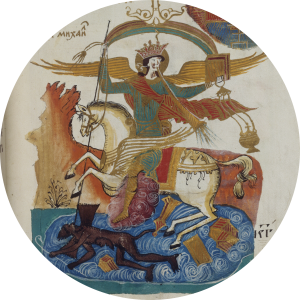
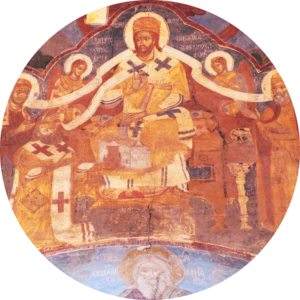
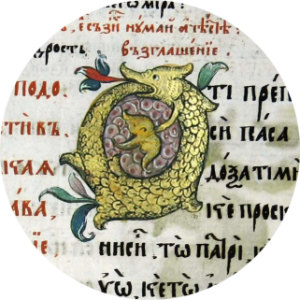
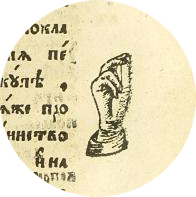
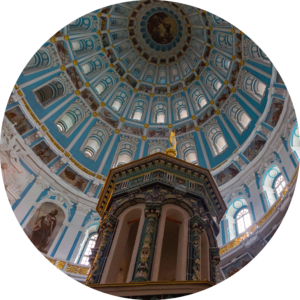
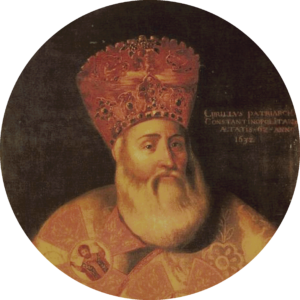
Detail of an medivial book illumination of the Archangel Michael as “Captain of the Heavenly Host”Detail of the Fresco by brothers Ioannis and Georgios (1643) “Peter Mohyla, Metropolitan of Kyiv, Halych, and All Rus, kneels before Christ, offering Him the recently restored Berestove church” in the church of the Saviour at Berestove, KyivMedivial book illumination of Ouroboros. Liturgy of St. Basil the Great, First Prayer of the Faithful – Library of the Romanian AcademyInkdrawing of the making of the sign of the Cross with three fingers, as opposed to two.Picture of the Replica of the church of the Holy Sepulchre in the Resurrection Cathedral of the New Jerusalem Monastery on Istra river.Detail of the painted portrait from an unknown artist of “Kyrillos Patriarch of Constantinople, aged 62, year 1632”