
Blog Entries
Ein calvinistischer Patriarch auf dem ökumenischen Thron im 17. Jahrhundert Über eine Reformation im Schatten der Reformation
Ovidiu Olar
Der Standard / Balkan Blog
© 2023
Ukrainischer Kosakenführer Iwan Mazepa: Nationalheld, Verräter oder Grenzgänger?
Liliya Berezhnaya
Der Standard / Balkan Blog
© 2024
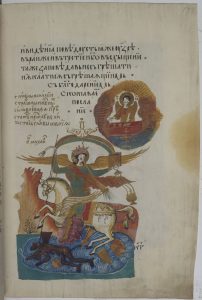
Der Hauptmann der himmlischen Heerscharen
Ovidiu Olar
Der Standard / Eurasia Blog
© 2025
Grenzheiligtum: Die wundertätige Gottesmutter von Počajiw
Liliya Berezhnaya
Der Standard / Eurasia Blog
© 2025
Papers
Паисий Лигарид в Киеве [Paisios Ligaridis in Kyiv]
Vera G. Tchentsova
Київська Академія 18 (2021) [published in June 2022]: 49–107
© 2022
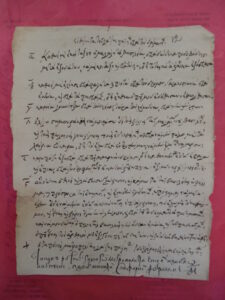
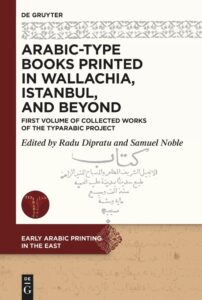
“Libertà et licenza… di stampare mille heræsie et schismi: The Propaganda Fide and the Greek Printing Press at Constantinople (1627-1628)”
Ovidiu Olar
in Radu Dipratu, Samuel Noble (eds), Arabic-Type Books Printed in Wallachia, Istanbul, and Beyond (Berlin – Boston: De Gruyter, 2024), 89–120
© 2024
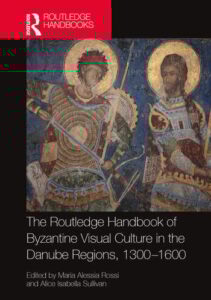
Byzance après Byzance: The Paradigm
Ovidiu Olar, Ovidiu Cristea
in Maria Alessia Rossi, Alice Isabella Sullivan (eds), The Routledge Handbook of Byzantine Visual Culture in the Danube Regions, 1300–1600 (London – New York: Routledge, 2024), 11–25
© 2024
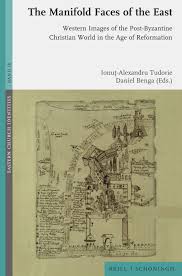
Giulio Mancinelli, SJ (†1618) and his Journey across Wallachia and Moldavia
Ovidiu Olar
in Ionuț-Alexandru Tudorie, Daniel Benga (eds), The Manifold Faces of the East: Western Images of the Post-Byzantine Christian World in the Age of Reformation (Leiden – Boston: Brill Schöningh 2024), 231-263
© 2024
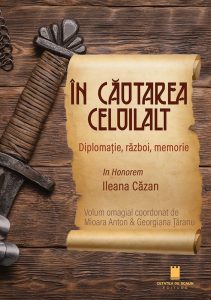
Giulio Mancinelli SI (†1618) şi călătoria sa prin Valahia şi Moldova
Ovidiu Olar
in Mioara Anton, Georgiana Ţăranu (eds), În căutarea ceiluilalt. Diplomaţie, război, memorie. In honorem Ileana Căzan (Târgovişte: Cetatea de Scaun, 2024), 117–141
© 2024
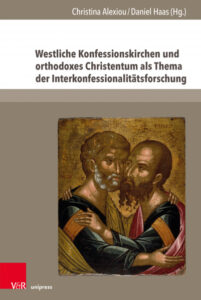
Visions of Orthodox Unity in the Seventeenth Century
Nikolas Pissis
in Christina Alexiou, Daniel Haas (eds), Westliche Konfessionskirchen und orthodoxes Christentum als Thema der Interkonfessionalitätsforschung (Göttingen: Brill V&R unipress, 2024), 55–69
© 2024
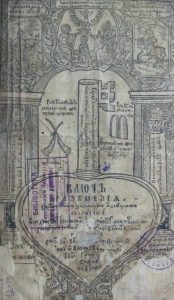
Ms. rom. 4648 al Bibliotecii Academiei Române: predicile lui Ioanichie Haleatovski din coligatul ieromonahului Ștefan de la Mănăstirea Bistrița
Andreea-Isabella Tatoi
Limba română 2023, No. 3-4 (2023): 417-424 [DOI: 10.59277/LR.2023.3-4.05]
This paper presents a detailed description of the Romanian Manuscript 4648, found in the Library of the Romanian Academy in Bucharest, which contains some of the Ioanykiy Halyatovsky’s homillies written in The Key to Understanding (Ключ розуміння). The manuscript we are describing contains a printed copy of the Romanian translation Cheia înțelesului (Bucharest, 1678) and a manuscript version of other Halyatovsky’s homillies. We explain how this colligate was composed and we reveal its connection with the original printed work.
Greek in Cyrillic Script: A Manuscript from the Library of the Metochion of the Holy Sepulchre at Constantinople
Ovidiu Olar
The Historical Revue / La Revue Historique 20 (2023): 27-42 [DOI: 10.12681/HR.40062]
The aim of this article is to address a manuscript containing the Divine Liturgy of Saint Basil the Great kept in the library of the Metochion of the Holy Sepulcher at Constantinople. The codex is bilingual, Greek-Romanian: the Romanian version, in Cyrillic script (as per norm), occupies the recto and mirrors the Greek text. However, the Greek text on the verso is written in Cyrillic script, too. Based on evidence provided by related archival materials, it seeks to explain the rationale behind this choice of diachronic digraphia (the formula is used here strictly to designate the writing of one language in the script of another). The paper is part of a special section dedicated to Frangochiotika (https://ejournals.epublishing.ekt.gr/index.php/historicalReview/issue/view/2196
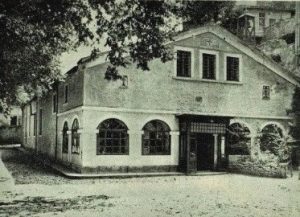
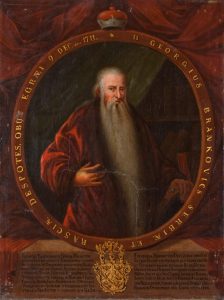
Quelques considérations sur le Catéchisme perdu et retrouvé de Georges Branković
Levente Nagy
Apvlvm – Historia & Patrimonium. Supplementum 61 (2024): 33-48
This study offers a comparative analysis of selected chapters from the catechism of George Branković (Gheorghe Brancovici, Đorđe Branković, 1645-1711) – a text long considered lost – and other contemporary catechisms and confessions of faith, including those of Ștefan Fogarasi, Varlaam, and Kyrillos Loukaris. The comparison also extends to the prefaces accompanying various books of the New Testament of Bălgrad (1648). The analysis focuses primarily on the chapters addressing the themes of faith, good works, and fasting, seeking to elucidate both the theological continuities and distinctive doctrinal nuances present in Branković’s work within the broader context of seventeenth-century Orthodox and Reformed catechetical literature.
Contribuții la istoria ritului bizantino-slav al românilor. Liturghierul de la Mănăstirea Dealu (1646)
Mihail K. Qaramah
in: Ana Dumitran (ed.), Ecclesia super omnia, ed. Silvia-Emilia Buda, Andrei Buda (Alba Iulia – Cluj-Napoca: Editura Muzeului Naţional al Unirii – Mega, 2024), 63-107.
The study attemps to identify the sources of the Leitourgikon printed at Dealu Monastery (Wallachia) in 1646. Thus, this edition is here compared with some of the most important Ruthenian Sluzhebniki printed in the first half of the 17th century. The Wallachian Leitourgikon is not a simple reprint of a particular Ruthenian edition, having a table of contents that individualizes it. However, the comparative analysis shows that its main model was the 1637 Lviv Sluzhebnik. Therefore, the Dealu Leitourgikon is part of the liturgical reform program of the Church of Wallachia in the 17th century, which had as an essential component the printing of liturgical books of the Ruthenian tradition.
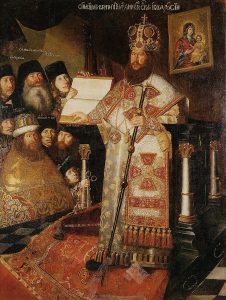
Some Minor Words: The Debate on Symphonia at the Moscow Church Council of 1666/67
Nikolas Pissis
Russian Studies (HU) 7, No. 1 (2025): 97-119 [DOI: 10.38210/RUSTUDH.2025.7.5]
Although principles were, as a rule, not a matter of debate in Muscovite political culture, experiences of crisis, such as the Smuta or the conflict between Patriarch Nikon and Tsar Aleksei Mikhailovich, did instigate pertinent fervent discussions on how the God-given order was best to be perceived and restored. This paper outlines the debate on the relationship between and the mutual dependency of secular and ecclesiastical power that erupted after Nikon’s ambiguous abdication in 1658 and culminated at the Moscow Church Council of 1666/67. It focuses on a crucial but somewhat enigmatic episode during the Council, when two Russian bishops, Metropolitan Pavel of Krutitsy and Bishop Ilarion of Riazan, protested against the formulation included in the Tomos of the four Eastern patriarchs (1663) concerning the primacy of the emperor. Their objection led to the Council issuing a revised statement, reformulating the classical notion of symphonia (the emperor is responsible for political matters, the patriarch for spiritual ones), although the two prelates had to face disciplinary sanctions. The paper draws mainly on the writings of the debate’s main protagonist, the infamous Metropolitan of Gaza, Paisios Ligaridis, in order to clarify what we may reasonably deduce from the account of the self-righteous Greek prelate and certain further evidence concerning, on the one hand, the protagonists’ motives, and on the other, the whole episode’s actual significance.
In the Name of the Holy Spirit(s): Contested Baptisms between Catholics and Orthodox in Seventeenth-Century Northern Ottoman Europe
Emese Muntán
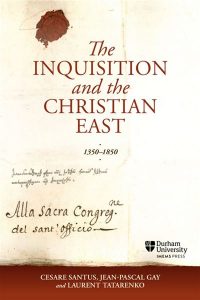
in: Cesare Santus, Jean-Pascal Gay, Laurent Tatarenko (eds), The Inquisition and the Christian East, 1500-1800 (Woodbridge – Rochester: Durham University IMEMS Press, 2025), 223-46.
The sixteenth-seventeenth-century expansion of Catholicism in different parts of the world led to the rapid increase of various doubts regarding the correct administration of the sacraments, including baptism. In this paper, I talk about the factors that informed the attitude of Catholic missionaries, mainly Jesuits and Bosnian Franciscans towards the baptismal practices of the Serbian Orthodox clergy and how, on their end, Orthodox priests related to the baptism of Catholics in seventeenth-century Ottoman Europe. The cases presented primarily come from the central, north, and northeastern provinces of the Balkan lands under Ottoman rule. I present different baptismal practices that Catholic missionaries found erroneous, usually, in terms of form and/or substance. At the same time, I also address the contentious issue of conditional baptism and rebaptism that Catholic missionaries and Orthodox priests, respectively resorted to in their attempts to vindicate the propriety of one rite over another. In terms of primary sources, I primarily draw on Catholic missionary reports, decisions of the Holy Office and Propaganda Fide, and a smaller number of pertinent Orthodox sources. In the broadest sense, the goal of this presentation is to show how various case studies from early modern Ottoman Europe can complement and complicate our understanding regarding the issue of inquisitorial and/or confessional control that one generally tends to associate with a centralized Catholic Church. At the same time, it aspires to provide future compass points that could integrate Ottoman Europe better into the international scholarly debates on the various aspects that defined Catholic-Eastern Christian relations in the early modern period.
« Menacing, powerful and frightful captain of the heavenly host » The Archangel Michael in Early Modern Eastern and Southeastern Europe
Ovidiu Olar
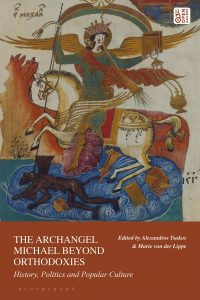
in: Alexandros Tsakos, Marie von der Lippe (eds), The Archangel Michael Beyond Orthodoxies: History, Politics and Popular Culture (London – New York – Oxford – Sydney: Bloomsbury Academic, 2025), 65-96 [DOI: 10.5040/9781350302716]
In this chapter, I discuss the rise and impact of a specific iconographic type of the Archangel Michael – the winged horseman of the Apocalypse – in early modern Southeastern Europe. Taking as a starting point a lavishly illuminated 1610 Church Slavonic manuscript produced in the scriptorium of the Moldavian monastery of Dragomirna, I analyze the transformations that occurred after the fall of Constantinople in terms of the narratives concerning the “captain of the heavenly host.” Paying attention to both texts and images, I argue that the genesis and spread of many post-Byzantine creations were closely linked with the expectation of the end of days. Bringing to the fore the case of the Byzantine cult of the Archangel Michael, I also show how dynamic and effective the imagery of the “chosen people” – first the Jews and then the Byzantines (and subsequently the Muscovites) – proved to be, regardless of the 1453 symbolic watershed.
Editions
Vision de Varnava. Înțăleptului Varnava minunată arătare a vederii lui cu pildă tuturor
Dana Shishmanian
(Heidelberg: Herloo Verlag, 2024) [“Supplementa Études byzantines and post-byzantines” 5/2] (ISBN vol. 2: 978-3-948670-24-5) [DOI: 10.17613/st998-w3y64]
The second of two volumes gathering papers presented at a conference held at the New Europe College Institute of Advanced Studies in Bucharest, on 13–15 October 2022. The conference was organised within a research project financed by the Romanian Ministry of Education and Research, The Akathistos Hymn in the Byzantine and Post-Byzantine Traditions. The History of a Liturgical Masterpiece Between Text and Image (AKATHYMN). Specialists in various fields – historians, art historians, philologists, experts in book history and liturgical music – address the textual, visual and chanted traditions of the Akathistos Hymn in the longue durée, with a special focus on its Early Modern history and on its multilingual textual tradition (Arabic, Armenian, Greek, Slavonic, and Romanian). The contributors are: Lidia Cotovanu, Nicolae Gheorghiță, Oana Iacubovschi, Roksolana Kosiv, Ovidiu Olar, Oksana Shyroka, Emanuela Timotin, and Sister Atanasia Văetiși. For the first volume, see https://works.hcommons.org/records/tmeja-0m557
De la Muntele Athos la București: Peregrinările unui manuscris din colecția Mănăstirii Stavropoleos / From Mount Athos to Bucharest: The Travels of a Manuscript from Stavropoleos Monastery’s Collection
Ovidiu Olar
in Liturghierul grecesc de la Mănăstirea Stavropoleos. Ediţie facsimilată / Greek Divine Liturgies from Stavropoleos Monastery. Facsimile edition (Bucharest: Cuvântul Vieţii, 2024), 7–60
© 2024
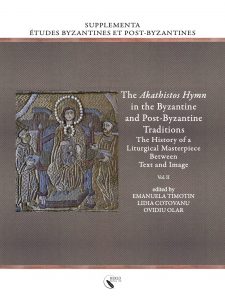
The Akathistos Hymn in the Byzantine and Post-Byzantine Traditions. The History of a Liturgical Masterpiece Between Text and Image, vol. 2
Emanuela Timotin, Lidia Cotovanu, Ovidiu Olar (eds)
(Heidelberg: Herloo Verlag, 2024) [“Supplementa Études byzantines and post-byzantines” 5/2] (ISBN vol. 2: 978-3-948670-24-5) [DOI: 10.17613/st998-w3y64]
The second of two volumes gathering papers presented at a conference held at the New Europe College Institute of Advanced Studies in Bucharest, on 13–15 October 2022. The conference was organised within a research project financed by the Romanian Ministry of Education and Research, The Akathistos Hymn in the Byzantine and Post-Byzantine Traditions. The History of a Liturgical Masterpiece Between Text and Image (AKATHYMN). Specialists in various fields – historians, art historians, philologists, experts in book history and liturgical music – address the textual, visual and chanted traditions of the Akathistos Hymn in the longue durée, with a special focus on its Early Modern history and on its multilingual textual tradition (Arabic, Armenian, Greek, Slavonic, and Romanian). The contributors are: Lidia Cotovanu, Nicolae Gheorghiță, Oana Iacubovschi, Roksolana Kosiv, Ovidiu Olar, Oksana Shyroka, Emanuela Timotin, and Sister Atanasia Văetiși. For the first volume, see https://works.hcommons.org/records/tmeja-0m557.
Monographs
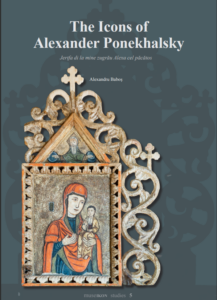
The Icons of Alexander Ponekhalsky. Jertfa di la mine zugrău Alexa cel păcătos
Alexandru Baboș
in Museikon Studies 5, (Alba Iulia – Cluj-Napoca: Mega, 2024)
© 2024
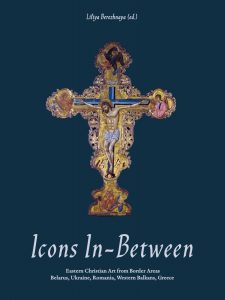
Icons In-Between: Eastern Christian Art from Border Areas (Belarus, Ukraine, Romania, Western Balkans, Greece)
Liliya Berezhnaya
ed. by Liliya Berezhnaya in cooperation with Lutz Rickelt
(Recklinghausen: Ikonen-Museum, 2025)
An English-language catalog, featuring contributions from renowned international scholars, which accompanied the exhibition “Icons In-Between” (Icon Museum in Recklinghausen, 26 January – 6 July 2025). The catalog was funded by the Excellence Cluster EurAsian Transformations, supported by the FWF Foundation, Vienna; ORTHPOL; and the Stichting Sormani Fonds, Nijmegen.
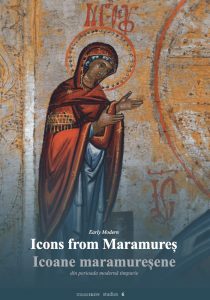
Early Modern Icons from Maramureș / Icoane maramureșene din perioada modernă timpurie
Alexandru Baboș, Roksolana Kosiv, Mihai Covaci, and Ana Dumitran
© 2026