
Members
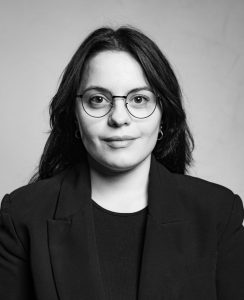
Ovidiu-Victor Olar
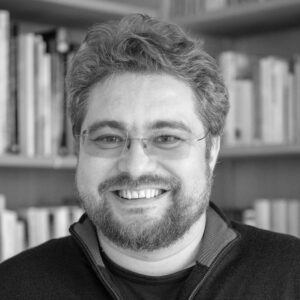
Ovidiu-Victor Olar (PhD, École des Hautes Études en Sciences Sociales, Paris) is a Researcher at the “N. Iorga” Institute of History of the Romanian Academy (Bucharest) and Junior Group Leader at the Institute for Habsburg and Balkan Studies of the Austrian Academy of Sciences (Vienna). He has authored the book La boutique de Théophile: Les relations du patriarche de Constantinople Kyrillos Loukaris (1570-1638) avec la Réforme (Paris, 2019). His research interest includes the confessional “Cold War” of the seventeenth century, the history of political ideas and Jazz in Communist Romania.
Ivan Almes
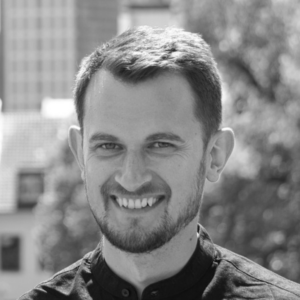
Ivan Almes (PhD 2018) is Associate Professor at the Department of History, director of the Ihor Skochylias Center for Religious Culture, and academic coordinator of the Kyivan Christianity Research Program at the Ukrainian Catholic University in Lviv. He did internships at the European University Viadrina (Frankfurt/Oder), Institute of the Eastern Churches of Julius Maximilian University of Würzburg (Germany), Institute of Sangalli (Florence, Italy), and Goethe University Frankfurt (Research Group “Polycentricity and Plurality of Premodern Christianities”). He researches the history of reading, monasticism, cultural history of saints and the religious history of early modern Ukraine and has authored more than 40 scholarly papers. His last book is Від молитви до освіти: Історія читання ченців Львівської єпархії XVII–XVIII ст. [From Prayer to Education: History of Monks’ Reading in the Lviv Eparchy of the 17th and 18th Centuries] (Lviv, 2021). He is a member of the Historical Commission of the Shevchenko Scientific Society and the Ukrainian Society for Eighteenth-Century Studies.
Mihai-Cristian Amăriuţei
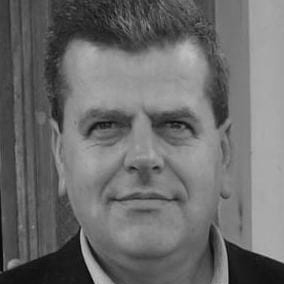
Mihai-Cristian Amăriuţei holds a PhD in History from the “Alexandru Ioan Cuza” University of Iași (2012). He is a Researcher at the “A.D. Xenopol” Institute of History of the Romanian Academy and the Deputy Editor of Archiva Moldaviae (Iași). His research focuses on the early modern and modern social, institutional, and cultural history of the Romanian Principalities, with a particular emphasis on archival materials. Mihai has edited several volumes of historical sources and authored the monograph Grigore al III-lea Alexandru Ghica. Cronica unui principe din secolul al XVIII-lea [Gregory III Ghica: The Chronicle of an 18th Century Prince] (Iași, 2017).
Elif Bayraktar Tellan
Elif Bayraktar Tellan is a historian specializing in the Ottoman Empire, with a focus on Orthodox communities and institutions during the Early Modern period. She received her BA from the Philosophy Department at Boğaziçi University in Istanbul. In 2005 and 2011, she completed her MA and PhD degrees in the History Department at Bilkent University in Ankara. Her PhD research was funded by TUBITAK (The Scientific and Technological Research Council of Turkey), the American Research Institute in Turkey, and the Turkish Cultural Foundation. Currently, she is a faculty member of the History Department at Istanbul Medeniyet University. Her publications primarily focus on the history of the Patriarchate of Constantinople in the eighteenth century, Orthodox monasteries in the Ottoman Empire, the Orthodox Church of Ottoman Cyprus and Crete, Orthodox-Catholic interactions in Ottoman lands, and the Orthodox notables of Istanbul. Special mention deserves the volume co-authored with Hasan Çolak, The Orthodox Church as an Ottoman Institution a Study of Early Modern Patriarchal Berats (Istanbul, 2019).
Liliya Berezhnaya

Liliya Berezhnaya, a former Associate Professor at the University of Münster’s Religion and Politics Cluster of Excellence, is currently a Visiting Professor at the Catholic University of Leuven and at the Central European University in Vienna. She earned her PhD in history from the Central European University. Her research interests are focused on comparative borderland studies, imperial and national discourses in Eastern European history, symbolic geography and the construction of “the other,” Ukrainian religious and cultural history, and eschatological notions in Christian traditions. Liliya’s recent book publications include Die Militarisierung der Heiligen in Vormoderne und Moderne (Berlin, 2020); Rampart Nations: Bulwark Myths of East European Multiconfessional Societies in the Age of Nationalism (New York / Oxford, 2019, co-edited with Heidi Hein-Kircher); Iconic Turns: Nation and Religion in Eastern European Cinema since 1989 (Leiden, 2013, co-edited with Christian Schmitt); and The World to Come: Ukrainian Images of the Last Judgment (Cambridge, Mass., 2015, co-authored with John-Paul Himka). She is a co-editor of the book series “Crisis, Conflict and Security in Central and Eastern Europe” (CEU Press).
Lidia Cotovanu

Lidia Cotovanu (PhD, École des Hautes Études en Sciences Sociales, Paris) is a Researcher at the “N. Iorga” Institute of History of the Romanian Academy in Bucharest. Her research focuses on migration flows in late medieval and early modern South-Eastern Europe (14th to 17th centuries), specifically the public and social pathways for the circulation of people and properties (both material and symbolic) between the immigrants’ departure and arrival points. She also investigates collective issues of sovereignty during the age of divine rights, processes of personal identification, and the representation of foreigners in public and social contexts before the establishment of nation-states. Lidia is the author of Émigrer en terre valaque: Estimation quantitative et qualitative d’une mobilité géographique de longue durée (seconde moitié du XIVe – début du XVIIIe siècle) (Brăila, 2022).
Stauros Grimanis
Stauros Grimanis studied Philosophy at the Faculty of Philosophy (2008) and Theology at the Faculty of Social Theology (2000) at the University of Athens. He holds an MA in Christian Worship and Byzantine Hagiography, as well as a PhD in Byzantine Hagiography from the same university (2011). He conducted postdoctoral research at the Hellenic Institute of Byzantine and Post-Byzantine Studies in Venice as researcher of the Faculty of History of the University of Crete (2012–2015). His research focuses on Gavriil Seviros (1578–1616), the first Greek Orthodox bishop of Philadelphia in Venice. Stavros has participated in various research projects on archival and literary sources, collaborating with institutions such as the Gennadius Library of the American School of Classical Studies at Athens (2017–2022), the University of Athens (2019–2023), and the Research Center for Humanities in Athens (2018). His main research areas include the intellectual history of the post-Byzantine period and hagiographic literature, on which he has published and presented various papers. Since 2023, Stauros is the Head of the Historical and Paleographical Archive of the National Bank Cultural Foundation in Athens.
Kevin M. Kain
Kevin M. Kain is Teaching Professor at the University of Wisconsin Green Bay. He holds a PhD from Western Michigan University (Diss. “Patriarch Nikon’s Image in Russian History and Culture,” 2004). Kain co-translated and edited Ioann Shusherin’s seventeenth-century Life of Nikon (2007) and co-edited, with David M. Goldfrank, a two-volume collection on Russia’s Early Modern Orthodox Patriarchate (2020). In the broadest sense, his work investigates Russian conceptions of New Jerusalem in connection with Russian rulers’ claimed inheritance of the “Byzantine legacy.” Kevin has focused on the three monasteries founded by Nikon, especially Resurrection “New Jerusalem,” in connection with the patriarch’s reform of church books and rituals and his relations with Eastern hierarchs and monastics. He has also published on dissenting Old Believers’ treatments of Nikon and his initiatives.
Dimitris Kousouris
Dimitris Kousouris holds a PhD in History from the École des Hautes Études en Sciences Sociales (Paris). A former Assistant Professor at the University of Vienna and Research Fellow at the Universities of Princeton, Chicago, and Konstanz, he has authored and co-edited numerous articles, books, and collective volumes in Modern and Contemporary History. He recently co-edited the volume Understanding the Greek Revolution (1821-1832): New Approaches in Social, Political and Cultural History (Leiden / Boston, 2024, co-edited with Elias Kolovos). Dimitris’ monograph, Sira nostra Patria: The Latins of the Archipelago Between Empire and Nation-State, is forthcoming with Berghahn.
Octavian-Adrian Negoiță
Octavian-Adrian Negoiță is a Researcher at the Institute for the History of Religions of the Romanian Academy (Bucharest), where he conducts research in the field of medieval and early modern intellectual history of East and Southeast Europe. He earned his PhD in 2020 from the University of Bucharest and he has since participated in several major research projects: the ERC Consolidator Grant OTTOCONFESSION, the ERC Synergy Grant The European Qur’an (EuQu), and the ERC Advanced Grant TYPARABIC. Octavian published several studies and articles in peer-reviewed journals and collected volumes. He has edited the volume Eastern Christians’ Engagement with Islam and the Qur’ān (c. 8th–18th Centuries): Texts, Contexts and Knowledge Regimes, forthcoming in 2025 with De Gruyter.
Nikolas Pissis
Nikolas Pissis holds a PhD from Freie Universität Berlin. He is a former member of the Institute for Greek and Latin Philology (FU Berlin) and the DFG-funded research @entre “Episteme in Motion: Transfer of Knowledge from the Ancient World to the Early Modern Period.” Currently, Nikolas is an Assistant Professor of History of Eastern and Southeastern Europe at the Ionian University in Corfu. He has authored a monograph titled Russland in den politischen Vorstellungen der griechischen Kulturwelt 1645–1725 (Göttingen, 2020) and has published studies on Greek-Russian Early Modern connections, apocalyptic currents, messianic movements, and Byzantine and post-Byzantine prophetic literature.
Mihail K. Qaramah
Mihail Khalid Qaramah received his PhD in Theology (2021) with a specialization in Liturgical Studies from the “1 Decembrie 1918” University of Alba Iulia (Romania) and is currently a Lecturer of Practical Theology at the same institution. His research interests include the evolution of the Byzantine rite, the history of the Byzantine-Slavic liturgy among Romanians, and liturgical reform in the Orthodox Church. Since 2022, he has served as Assistant Editor of Museikon: A Journal of Religious Art and Culture. Mihail has authored several monographs, including O istorie a Molitfelnicului românesc. Evoluția formularelor Sfintelor Taine (sec. XVI-XVII) [A History of the Romanian Euchologion: The Evolution of the Formularies of the Sacraments (16th-17th c.)] (Alba Iulia, 2022).
Dariya Syroyid

Dariya Syroyid (PhD, Ivan Franko National University of Lviv, Ukraine) is an Associate Professor at the Theological Faculty of the Ukrainian Catholic University. She has published numerous articles on Church Slavonic hagiography, apocrypha, and homiletics, as well as several translations from Church Slavonic into modern Ukrainian. Her current research interests focus on early Christian texts found in Church Slavonic manuscripts dating from the 11th to the 18th centuries. Dariya’s monograph Свята апостолка і первомучениця. Діяння Павла і Теклі в руській традиції [Holy Apostle and Protomartyr. Apocryphal Acts of Paul and Thecla in Ruthenian Tradition] is forthcoming in 2025 in the Kyivan Christianity Series of the Ukrainian Catholic University in Lviv.
Andreea-Isabella Tatoi
Andreea-Isabella Tatoi is a Junior Researcher in the Philology Department at the Institute of Linguistics of the Romanian Academy. She is a PhD student in Philology at the University of Bucharest. Her thesis focuses on the contribution of Ioannykij Haleatovskyj’s homilies from the volume Cheia înțelesului to the Romanian homiletic discourse and traces their circulation in the Romanian-speaking areas. Isabella specifically analyses manuscripts containing the unpublished Romanian translation of Haleatovskyj’s homilies.
Emanuela Timotin

Emanuela Timotin, Dr. habil., is the Head of the Philology Department at the Institute of Linguistics of the Romanian Academy and Chair of the Committee on Charms, Charmers and Charming (ISFNR). Her research areas are Romanian philology, charms, and apocrypha. She has directed the AKATHYMN project (New Europe College, Bucharest, 2021-2023). She recently edited: Représentations de la Vierge Marie entre culte officiel et vénération locale. Textes et images (Heidelberg, 2022, co-edited with Cristina Bogdan and Cristina-Ioana Dima) and Biblical Apocrypha in South-Eastern Europe and Related Areas (Brăila, 2021, co-edited with Maria Cioată and Anissava Miltenova). Emanuela’s most recent book is The Cheirograph of Adam in Armenian and Romanian Traditions. New Texts and Images (Turnhout, 2023, co-authored with Michael E. Stone).
Ionuț-Al. Tudorie
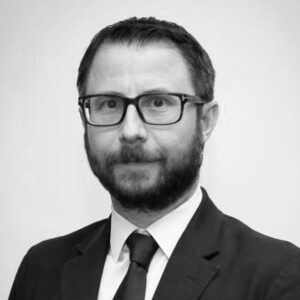
Ionuț-Al. Tudorie is the Academic Dean and Professor of Church History at St. Vladimir’s Orthodox Theological Seminary (Yonkers, NY). He is also the Editor-in-chief of St. Vladimir’s Theological Quarterly. He holds two PhDs—one in Theology and another in History—from the University of Bucharest. Ionuț has edited several volumes, including the proceedings of a conference on the legacy of the French Assumptionists for Byzantine studies: L’apport des Assomptionnistes français aux études byzantines: une approche critique (Paris, 2017, co-edited with Marie-Hélène Blanchet). His publications include a monograph on the relationship between the State and Church in 13th-century Byzantium (2017) and an analysis of the early 18th-century dialogue between the Anglican Non-jurors and the Eastern Church (2012).
Yorgos Tzedopoulos
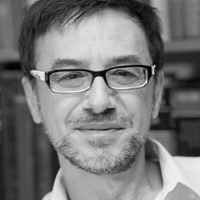
Yorgos Tzedopoulos is Assistant Professor of early modern Greek history at the University of Ioannina with a PhD from the University of Athens. He has co-authored the book Χριστιανοί και μουσουλμάνοι στην Οθωμανική Αυτοκρατορία: Θεσμικές πραγματικότητες και κοινωνικές δυναμικές [Christians and Muslims in the Ottoman Empire: Institutional Realities and Social Dynamics] (Athens, 2015, co-authored with Eleni Gara) and has published studies on the social identities of Greek Orthodox Christians under Ottoman rule, as well as on cultural and religious interactions between Christians and Muslims.
Vera Tchentsova
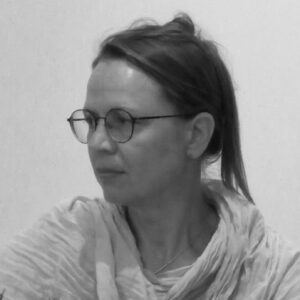
Vera G. Tchentsova is maître de conférences at the École pratique des hautes études and a member of UMR 8167 Orient et Méditerranée (Paris). She is one of the leading specialists in Russia’s relations with the Early Modern Christian East. Vera has published extensively on this subject, including studies on Patriarch Makāriyūs III Ibn al-Za‘īm of Antioch—who participated in the 1666/67 Synod that condemned Nikon—and on the Greek scribes employed by Nikon. Particularly significant for the project is her monograph Икона Иверской Богоматери. (Очерки истории отношений Греческой церкви с Россией в середине XVII в. по документам РГАДА) [The Icon of the Mother of God from Iviron. Essay on the Relationship between the Greek Church and Russia in the Middle of the 17th Century, Based on Documents from RGADA] (Moscow, 2010).
Maksim Yaremenko
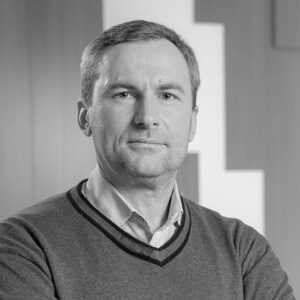
Maksym Yaremenko, Dr. hab., is Head of the Department of History of the National University of Kyiv-Mohyla Academy. He is also affiliated with the National Museum of History of Ukraine. His research focuses on Church and social history, as well as the history of education during the 17th to 19th centuries. Maksym has authored approximately 160 scholarly publications, including four monographs. His most recent book is Церковні празники та релігійна ідентичність: українські та російські місяцеслови кінця XVIII ст. [Church Feasts and Religious Identity: Ukrainian and Russian Menologia of the Late Eighteenth Century] (Lviv, 2023).
Affiliated Researchers
Dimitris Agoritsas
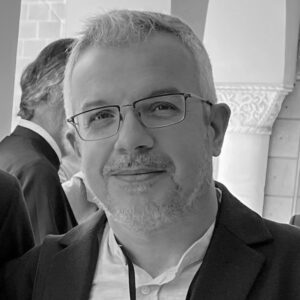
Dimitris Agoritsas holds a PhD in Byzantine History from the University of Ioannina. He has taught Byzantine history at the Ionian University (Corfu), the University of Patras, and Aristotle University of Thessaloniki. His research focuses on Late Byzantine history, social history, education, hagiology, and monasticism. His publications include Βίος καὶ πολιτεία τῶν ὁσίων Νεκταρίου καὶ Θεοφάνους τῶν Ἀψαράδων, κτιτόρων τῆς Ἱερᾶς Μονῆς Βαρλαάμ. Βίος – Διαθηκῷον γράμμα – Ἐγκωμιαστικὰ κείμενα [The Vita of Saints Nektarios and Theophanes Apsaras, Founders of the Holy Monastery of Varlaam. Vita – Testament – Encomiastic Texts] (Holy Meteora, 2018).
Grigor Boykov
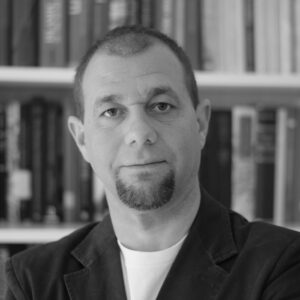
Grigor Boykov is Assistant Professor at the Institute for East European History at the University of Vienna. He earned his Ph.D. in Ottoman history from Bilkent University, Ankara, in 2013. Previously he has taught at the University of Sofia and the Central European University in Budapest, and was a researcher at the Institute for Habsburg and Balkan Studies at the Austrian Academy of Sciences. His publications focus on the history of the Balkans under Ottoman rule, integrating established historical approaches with methods from Digital and Spatial Humanities. Grigor’s most recent monograph is Space, Architecture, and Population (14th–17th Centuries) (Vienna, 2024).
Ana Dumitran
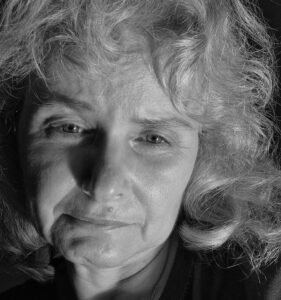
Ana Dumitran received her PhD in Church History in 2003 from the “Nicolae Iorga” Institute of the Romanian Academy in Bucharest. She is Curator at the National Museum of the Union in Alba Iulia, Romania, and Head of the Museikon department. Additionally, she serves as Senior Editor of Museikon: A Journal of Religious Art and Culture. Ana has authored several monographs and edited multiple volumes. Her recent publications include Intercultural and Visual Art Transfer in Central Europe and the Balkans: Ruthenian-Ukrainian and Romanian Art from the 15th to the Early 19th Century (Alba Iulia/Cluj-Napoca, 2023, co-edited with Mirosław Piotr Kruk), and Russian Icons from Transylvania: Exhibition Catalogue (Alba Iulia/Cluj-Napoca, 2023, , co-edited with Dumitrița-Daniela Filip). In 2013, Ana was awarded the “George Oprescu” Prize by the Romanian Academy in the field of art history.
Mariya Kiprovska
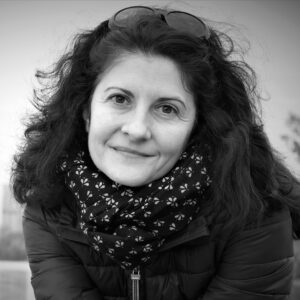
Mariya Kiprovska is completing her doctoral dissertation at the Central European University in Vienna. Her research focuses on the borderlands of the Ottoman Empire in pre-modern times, particularly on the frontier elites and their impact on regional socio-political developments. Her dissertation challenges the traditional patrimonial model of Ottoman governance by highlighting the role of peripheral elites in the state-building processes during the fourteenth to sixteenth centuries. Additionally, she has a deep interest in Christian monastic communities under Ottoman rule, examining their interactions within the broader imperial context as a laboratory for studying the interconnected histories of diverse social actors within and across imperial borders.
Nagy Levente
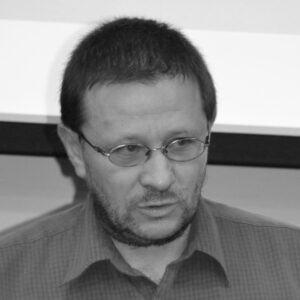
Nagy Levente, Dr. habil., is a Professor at Eötvös Loránd University and the Head of the Department of Romanian Philology, part of the Institute of Romance Studies within ELTE’s Faculty of Humanities (Budapest). He is a leading expert in Hungarian-Romanian cultural relations and has published extensively on this topic, as well as on Early Modern Transylvanian cultural history. Levente’s recent publications include: A román reformáció. Egy 16–17. századi magyar-román kulturális és irodalmi transzferjelenség [The Romanian Protestant Reform: A Hungarian-Romanian Cultural and Literary Transfer in the 16th and 17th Centuries] (Budapest, 2020; Romanian translation: Oradea, 2021); and A király, a zsarnok és a propaganda. Mátyás király és a 15. századi Drakula-történetek [The King, the Tyrant, and the Propaganda: King Matthias and the Dracula Narratives in the 15th Century] (Budapest, 2021).
Iulia Nițescu

Iulia Nițescu received her PhD in Russian Philology in 2017 from the University of Bucharest, with a thesis on the religious symbolism used to legitimize Muscovite political power. She is a member of the Research Institute of the University of Bucharest and, during the academic year 2021-2022, was a postdoctoral fellow at the New Europe College, Institute for Advanced Study (Bucharest). Her main research interests include religious identities and Church-State relations in 15th to 16th century Muscovy. She has participated in international conferences in the Austria, Portugal, United Kingdom, and the United States, and has published in journals such as Canadian-American Slavic Studies, Russian History, and the Slavonic and East European Review.
Camilla Pletuhina-Tonev

Camilla Pletuhina-Tonev is a Ph.D candidate in the Department of History at Princeton University, USA, where she works under the supervision of Prof. Molly Greene. Based on the primary and secondary sources in Ottoman Turkish, Russian, Serbian, and German, Camilla’s dissertation analyzes the role of the Serbian Patriarchate of Peć and its Orthodox high clergy as political actors in inter-imperial relations throughout the eighteenth century. She does so by tracing the so-called Orthodox mobility, Orthodox petitioning, and Orthodox diplomacy across the Ottoman, Russian, and Habsburg Empires from the late 17th to the late 18th centuries. A native of Moldova’s Gagauz Yeri, Camilla completed her undergraduate studies in History in Türkiye and received a Master’s degree in Comparative History from CEU in Vienna, Austria.
Lena Sadovski

Lena Sadovski holds a PhD in History from the University of Vienna (2023). She is a postdoctoral researcher at the Institute for Habsburg and Balkan Studies of the Austrian Academy of Sciences, focusing on the late medieval and early modern history of the Balkans, specifically Venetian Dalmatia and Catholicism in Bulgaria, Wallachia, and Moldova. Her book, Venice and the Dalmatian Hinterland: Spalato, Poglizza, Almissa, and Clissa (Late 15th – Early 16th Century), is forthcoming with Brill in the series Later Medieval Europe.
Project Manager
Norma Schönherr

February 2022 – April 2024
Mišo Kapetanović

September 2024 –ongoing
Managerial Support
Edona Rexhepi